The Impact of Neurodiversity on Everything DiSC®

The intersection of Everything DiSC® and neurodiversity is an important area for modern organisations. Because the tools are used extensively to generate conversations aimed at developing workplace relationships, understanding how neurodivergent professionals interact with the assessment is essential for creating an inclusive environment.
Here is our analysis of how neurodiversity may impact DiSC results, and how the report can be utilised as a practical business tool.
The Impact of Neurodiversity on Everything DiSC Results
DiSC measures behavioural tendencies and preferences rather than cognitive processing or clinical traits. However, because neurodivergence shapes how a person processes information and manages energy, it naturally influences how they complete the assessment.
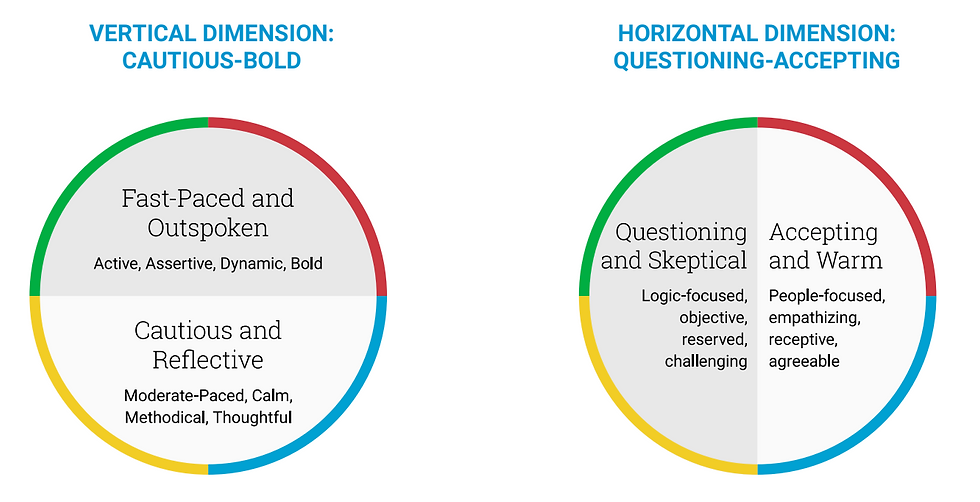
Alignment with Specific Behavioural Tendencies: Certain neurodivergent profiles may naturally lean toward specific DiSC quadrants due to their inherent processing styles. For instance, an autistic individual who excels at deep focus, values objective data, and thrives on structured systems will frequently map closely to the Conscientiousness (C) quadrant. Conversely, an individual with ADHD who craves novelty, fast-paced dynamics, and rapid iteration may score highly in Influence (i) or Dominance (D), prioritising action and enthusiasm.
The Impact of "Masking" on Profiles: If a neurodivergent person has spent years consciously or unconsciously adjusting their behaviour to fit into a neurotypical corporate environment—a process known as masking—their DiSC results may reflect their learned behaviour rather than their natural comfort zone. They might score highly in Steadiness (S) or Conscientiousness (C) simply because they have strictly trained themselves to meet those workplace expectations, even if doing so requires high levels of energy.
Adaptive Testing Ambiguity: Because Everything DiSC uses computer-adaptive testing, questions are context-dependent. Neurodivergent individuals sometimes find ambiguous phrasing (such as "I am usually expressive") challenging to answer without a specific context (e.g. at home versus in a crisis). Overthinking these scenarios can dilute the precision of the final dot placement on the DiSC map.
How the Report Can Be a Useful Tool for Neurodivergent People
When properly introduced as a method of improving personal understanding, the Everything DiSC report can be an exceptionally useful tool for neurodivergent individuals and their teams.

Creating an Explicit "Common Language": Many neurodivergent individuals find "reading the room" or parsing unwritten social rules exhausting. The DiSC report operates like an explicit, written user manual for human behaviour. By spelling out exactly what different styles care about—such as a D style wanting the bottom line, or an S style needing time to process change—it provides a clear, common language that removes the guesswork from collaboration.
De-Personalising Workplace Friction: Neurodivergent professionals frequently internalise workplace misunderstandings as personal failures. DiSC transforms these painful dynamics into objective, neutral data. If a highly analytical employee (high C) clashes with an energetic manager (high i), the tool demonstrates that this is not personal dislike, but rather a predictable friction between a style that values accuracy and one that values speed. This takes the emotion out of the conflict.
Tailoring Approaches and Comparison Reports: Tools like Comparison Reports are exceptionally useful for supporting direct managers and peers. These reports provide tailored, practical suggestions on how individuals can work more effectively together. For a neurodivergent employee, this offers a structured framework to agree on the best ways communication and information should be shared, without the need to formally disclose a medical diagnosis.
Framing "Flexing" as a Legitimate Business Strategy: There is a significant difference between masking (hiding traits due to stigma) and "flexing your style" (intentionally adapting to develop relationships). DiSC demonstrates that everyone, neurotypical or neurodivergent, must stretch into other quadrants to be effective. Fr
aming this adaptation as a practical, temporary business tool empowers individuals to choose when to flex their style consciously, without losing their sense of identity.
Conclusion
DiSC should not be viewed as a diagnostic tool, but rather as a practical asset to ensure that communication is provided in the most appealing and effective format. By using the profiles to review how team members act, communicate, and share information, organisations can build more inclusive environments where both neurotypical and neurodivergent professionals can thrive.
For more information about how to get started, and benefit from Everything DiSC please contact our team who will be pleased to help.